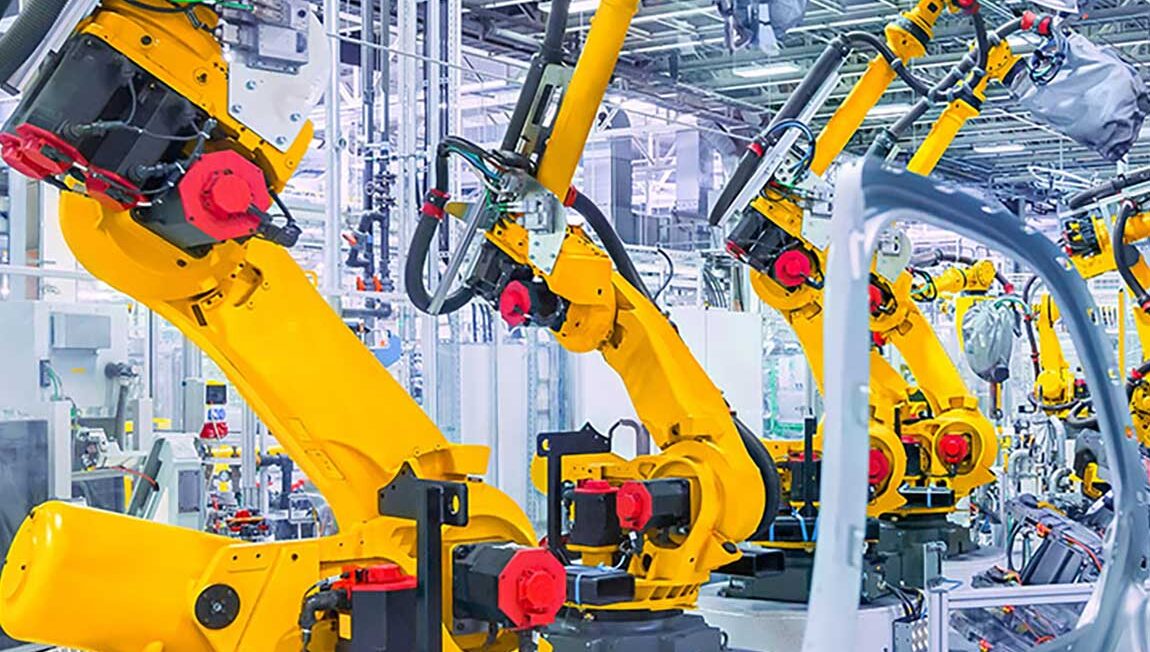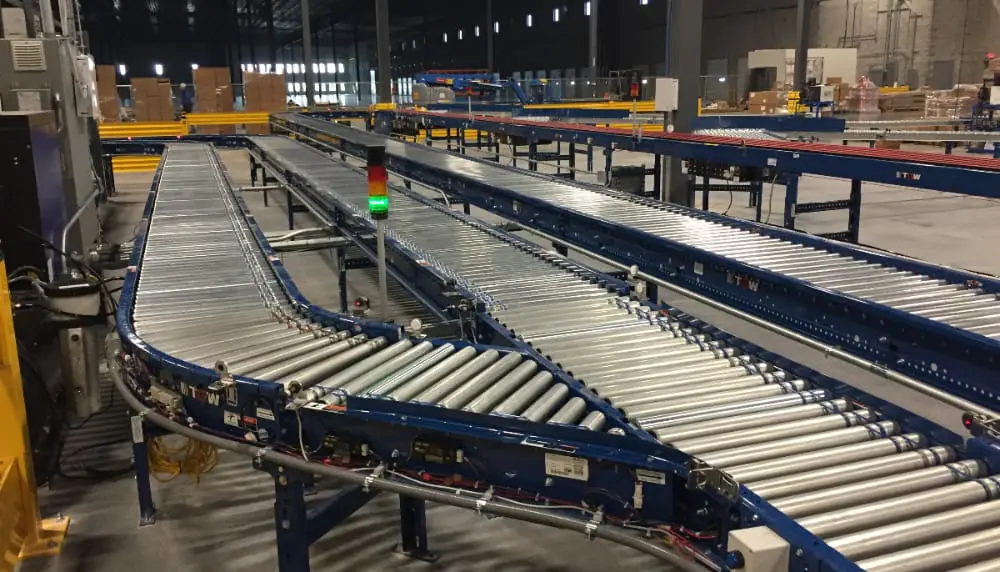
Efficient material flow is the critical path of any distribution center. When designing a system to move inventory from receiving to storage, and through to order fulfillment and shipping, operations managers generally face a choice between two distinct architectural approaches: fixed-path automated transport (Conveyors) and dynamic, autonomous transport (AMRs).
At Precision Warehouse Design (PWD), our engineering teams take an agnostic vendor-neutral approach. Because we partner with top-tier manufacturers across both categories, our goal is strictly to match the technology to your specific throughput requirements, labor constraints, and facility footprint.
Here is an objective look at how traditional conveyor and sortation systems compare to Autonomous Mobile Robots, and how to determine the right fit for your facility.
Conveyor & Sortation Systems: High-Throughput Fixed Infrastructure
Conveyor systems represent the traditional powerhouse of material handling. They are highly engineered, permanent fixtures designed to move massive, continuous volumes of inventory along a predefined physical path.
Our designs typically incorporate equipment from industry leaders like Hytrol, Roach Conveyors, Transnorm, FMH, MHS, and Eurosort to build robust transport arteries.
Key Capabilities & Technologies
- High-Speed Sortation: For operations processing 10,000+ items hourly, sortation systems (Cross Belt, Tilt Tray, and Shoe Sorters) are unmatched. A properly integrated cross-belt sorter can accurately divert up to 500 items per minute.
- Controlled Accumulation: Using Zero Pressure Accumulation (ZPA) and Motorized Drive Rollers (MDR), conveyor networks can buffer products and control flow without causing back-pressure, protecting fragile or high-value goods.
- Heavy & Standardized Loads: Conveyors excel at handling consistent profiles — whether utilizing Chain Driven Live Roller (CDLR) systems for heavy pallets or narrow belt sorters for standardized cartons.
- Dock Integration: Telescopic systems extend directly into trailers, radically reducing the labor required for loading and unloading.
Operational Profile
Conveyors require a significant upfront footprint and capital expenditure. Once installed, they act as an unyielding highway. They are the optimal choice when your material flow is highly predictable, throughput demands are extreme, and your facility layout is permanent.
Autonomous Mobile Robots (AMRs): Dynamic & Scalable Routing
Where conveyors rely on fixed steel and belts, AMRs utilize intelligent software, sensors, and facility mapping to navigate dynamically. Instead of bringing the product to a main transport line, AMRs navigate the warehouse floor to transport goods between workstations or execute goods-to-person (GTP) picking.
PWD collaborates with leading robotics developers, including Caja Robotics, Mushiny, Locus Robotics, Staubli, Tompkins Robotics, and Geek+ to deploy fleets tailored to specific workflows.
Key Capabilities & Technologies
- Goods-to-Person (GTP) Fulfillment: AMRs drastically reduce the travel time of human operators. By bringing the inventory directly to the picker, facilities see immediate spikes in pick accuracy and volume while reducing the overall footprint required for the process.
- Dynamic Navigation: Unlike older AGV systems that require magnetic tracks, AMRs adjust routes in real-time to avoid obstacles, creating a safer environment for human workers sharing the floor.
- End-of-Arm Tooling (EOAT) Synergy: Mobile systems frequently work in tandem with stationary robotic arms for complex tasks like mixed-case palletizing or inbound depalletizing.
Operational Profile
AMRs offer unparalleled scalability. If demand spikes during peak season, an operation can simply introduce more robots to the fleet without bolting new infrastructure to the floor. They are highly adaptable to existing building layouts and are ideal for eCommerce fulfillment operations with high SKU counts and unpredictable order profiles.
Objective System Comparison
| Engineering Criteria | Conveyor & Sortation Systems | Autonomous Mobile Robots (AMRs) |
| Throughput Ceiling | Extreme. Capable of processing tens of thousands of units per hour continuously. | High, but modular. Depends entirely on the number of active units in the fleet. |
| System Flexibility | Low. Rerouting requires physical teardowns, engineering, and new hardware. | High. Routes, pick zones, and workflows can be updated via software mapping. |
| Footprint Utilization | High. Requires dedicated permanent floor space; often utilizes overhead space. | Low to Moderate. Shares aisle space with operators; easily adapts to existing floor plans. |
| Capital Scalability | Stepped. Scaling up usually means a secondary capital project and facility downtime. | Linear. Easy to scale incrementally by adding or leasing additional robots. |
| Ideal Load Profile | Consistent, continuous flow of cartons, polybags, or heavy pallets. | Highly variable eCommerce orders, discrete picking, and goods-to-person transport. |
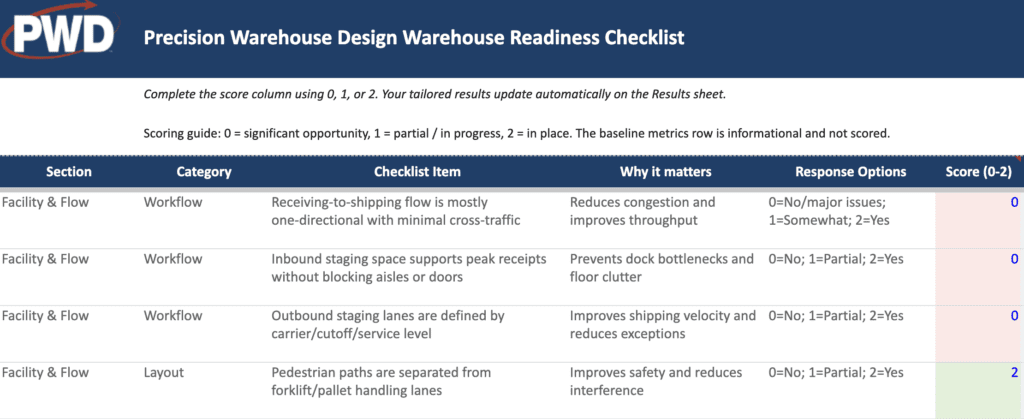
Warehouse Automation Readiness Template
Assess Your Automation Readiness in Minutes Using Our Free Template
The PWD Approach: Hybrid Integration
In modern fulfillment centers, evaluating Conveyors vs. AMRs is rarely an “either/or” proposition. The most efficient warehouses often utilize a hybrid approach engineered by PWD consultants.
Smart Conveyor Integration allows robotic solutions to sync directly with high-speed mechanical systems. For instance, a fleet of AMRs can handle the complex, highly variable task of picking individual items from high-density storage aisles, transporting those batches to an injection point on a high-speed tilt-tray sorter for rapid, automated packing and shipping consolidation.
Ready to Engineer Your Next Phase of Growth?
Our teams across the U.S. and Canada provide full system design, from the initial data analysis of your load profiles to seamless warehouse control system (WCS) integration. Contact us today to get started.