In today’s logistics environment, musculoskeletal disorders (MSDs) are one of the leading causes of downtime and lost revenue. These injuries often come from repetitive motions, poor lifting techniques, and inefficient layouts. When workers are constantly bending, reaching, and lifting in awkward ways, productivity drops and errors increase.
Many operations still assume that focusing on safety will slow things down. The opposite is true. OSHA has also increased its emphasis on ergonomics in the warehouse, highlighting it as a key factor in preventing injuries and improving operational performance. Furthermore, numerous studies show that reducing physical strain leads to measurable gains in output, accuracy, and consistency across many industries. When ergonomics in the warehouse is done right, it becomes a performance strategy, not just a safety requirement. A comfortable worker is a more productive worker.
Modern facility planning plays a key role here. By integrating ergonomic principles into layout design from the start, companies can increase throughput without adding unnecessary strain on workers. Solutions like those offered by Precision Warehouse Design build ergonomics directly into the workflow so your operation performs better from day one.
The ROI of Prioritizing Ergonomics in the Warehouse
Investing in ergonomics in warehouse environments delivers measurable returns across several areas of your operation.
First, there is a clear link between efficiency and reduced physical strain. When employees do not have to bend, twist, or reach excessively, they can maintain a steady pace throughout their shift. This leads to higher pick rates and fewer errors. Over time, even small improvements in movement can result in significant gains in output.
Second, better ergonomics reduces costs. Fewer injuries mean fewer workers’ compensation claims, lower medical expenses, and less absenteeism. It also reduces the need for temporary labor, which often comes with training challenges and higher error rates.
Third, ergonomics helps with retention. In a competitive labor market, workers are more likely to stay with employers who prioritize their well-being. A warehouse that is designed with employee comfort in mind stands out as a better place to work, helping you attract and keep skilled employees.
Best Practices for Improving Ergonomics in Warehouse Operations
Improving warehouse ergonomics does not require a complete overhaul overnight. Instead, you can focus on practical changes that make a noticeable difference in daily operations.
Optimization of the Power Zone
The Power Zone refers to the area between mid-thigh and mid-chest where lifting is easiest and safest. Keeping work within this range reduces strain on the back, shoulders, and knees.
A smart slotting strategy places high-velocity SKUs within the Power Zone. This minimizes the need for bending or reaching during frequent picks. By organizing inventory based on movement frequency, you can reduce fatigue and help workers maintain a steady pace throughout their shift.
Redesigning the Packing Station
Packing stations are one of the most active areas in a warehouse, and small improvements here can have a big impact.
Height-adjustable tables are essential. Whether hydraulic or electric, these tables allow workers of different heights to maintain a neutral posture while packing. This reduces strain on the back and shoulders.
You should also consider the reach envelope. The “18-inch rule” suggests keeping frequently used items such as tape, scanners, and labels within easy arm’s reach. This prevents unnecessary twisting and stretching, which can lead to fatigue over time.
Flooring is another important factor. Anti-fatigue mats help reduce the stress caused by standing on hard concrete surfaces. Over long shifts, this can significantly lower discomfort in the legs and lower back.
Leveraging Mechanical Assistance
One of the most effective ways to improve ergonomics in the warehouse is to reduce or eliminate manual lifting wherever possible.
Lift tables, pallet positioners, and vacuum lifters can handle heavy loads and keep materials within the Power Zone. This not only protects workers but also speeds up tasks by reducing the effort required for each movement.
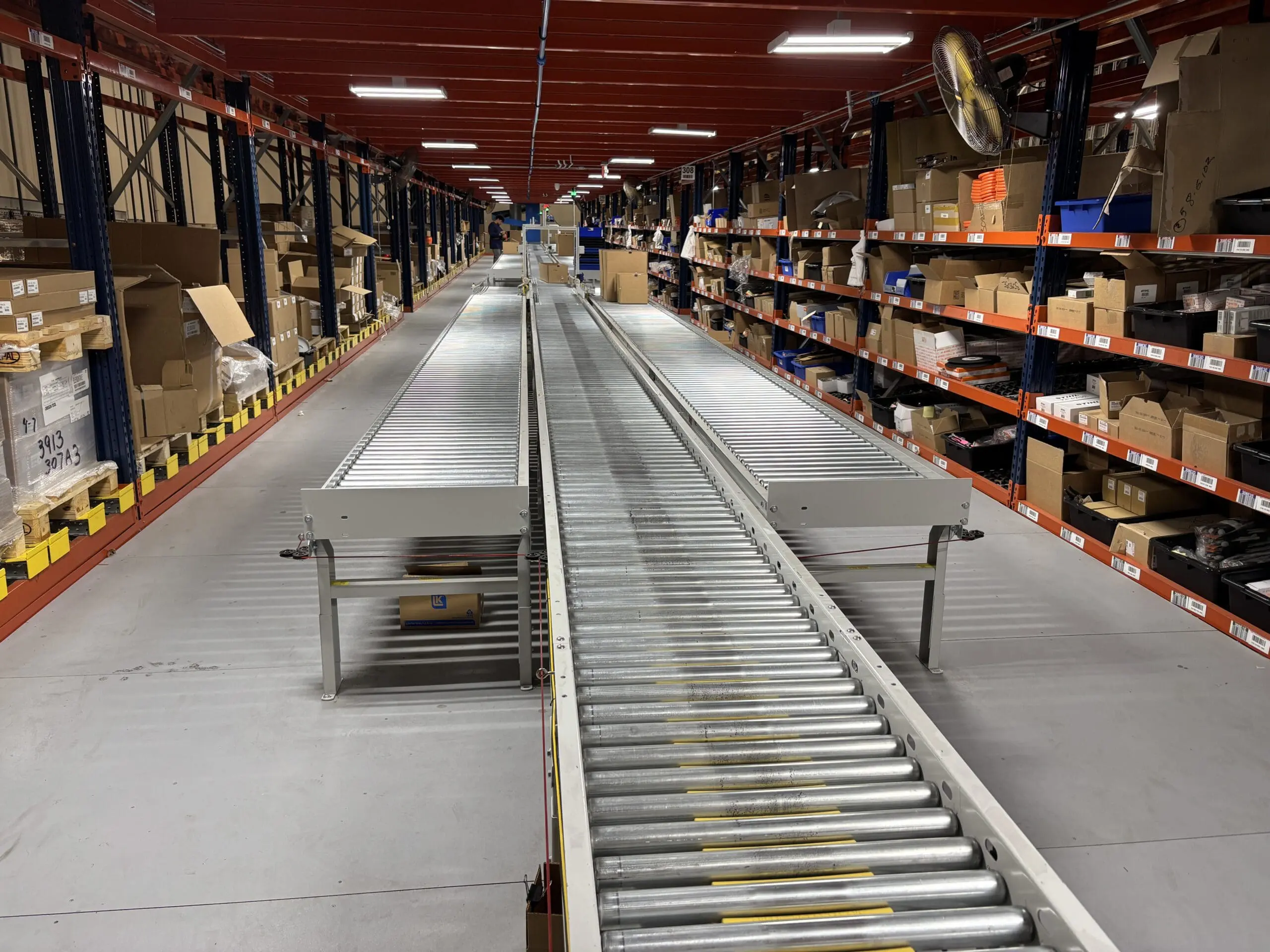
Conveyors are another valuable tool. Gravity rollers or powered conveyor systems can move goods across long distances without requiring workers to carry them. This reduces fatigue and improves overall workflow efficiency. Designing conveyor systems at an ergonomic height is a critical component of a safe and effective conveyor system. Operators should be able to put or remove items from a conveyor at an ergonomic height.
Working with experts can make a big difference in selecting the right equipment. For example, a professional audit through Precision Warehouse Design can help identify where mechanical assistance will have the greatest impact and recommend solutions tailored to your operation.
Environmental Factors in Warehouse Ergonomics
Ergonomics is not just about lifting and movement. The physical environment also plays a major role in worker comfort and performance.
Lighting and Visual Clarity
Proper lighting is critical in any warehouse. LED lighting improves visibility, reduces eye strain, and helps prevent headaches. Poor lighting often leads to squinting and awkward postures, which can contribute to long-term discomfort.
Shelf design also matters. Angling flow racks toward the aisle improves visibility and makes picking easier. When workers can clearly see products and labels, they can move faster and with more confidence.
Better visual ergonomics also improves accuracy. When items are easier to see and access, mispicks decrease, leading to fewer returns and higher customer satisfaction.
Administrative Controls and Workflow
In addition to physical changes, administrative strategies can support better ergonomics in warehouse operations.
Job rotation is a simple but effective approach. Rotating employees between picking, packing, and receiving tasks engages different muscle groups and reduces the risk of repetitive strain injuries. It also keeps work more engaging, which can improve morale.
Regular process reviews are equally important. By analyzing workflow paths, you can identify unnecessary steps or awkward movements that slow down operations. Small adjustments to layout or process flow can make tasks easier and more efficient.
Elevate Your Facility with Precision Warehouse Design
Warehouse ergonomics is not a single solution. It is a holistic approach that combines layout design, equipment selection, and process improvement. When all these elements work together, your operation becomes safer, faster, and more reliable.
If you are ready to improve your facility, do not rely on guesswork. Explore how warehouse design solutions can help you create a space that supports both safety and peak performance. By working with experienced professionals, you can build a warehouse that delivers long-term value for your business and your team. Contact Precision Warehouse Design today to schedule a consultation and start optimizing your facility for safer, more productive operations.