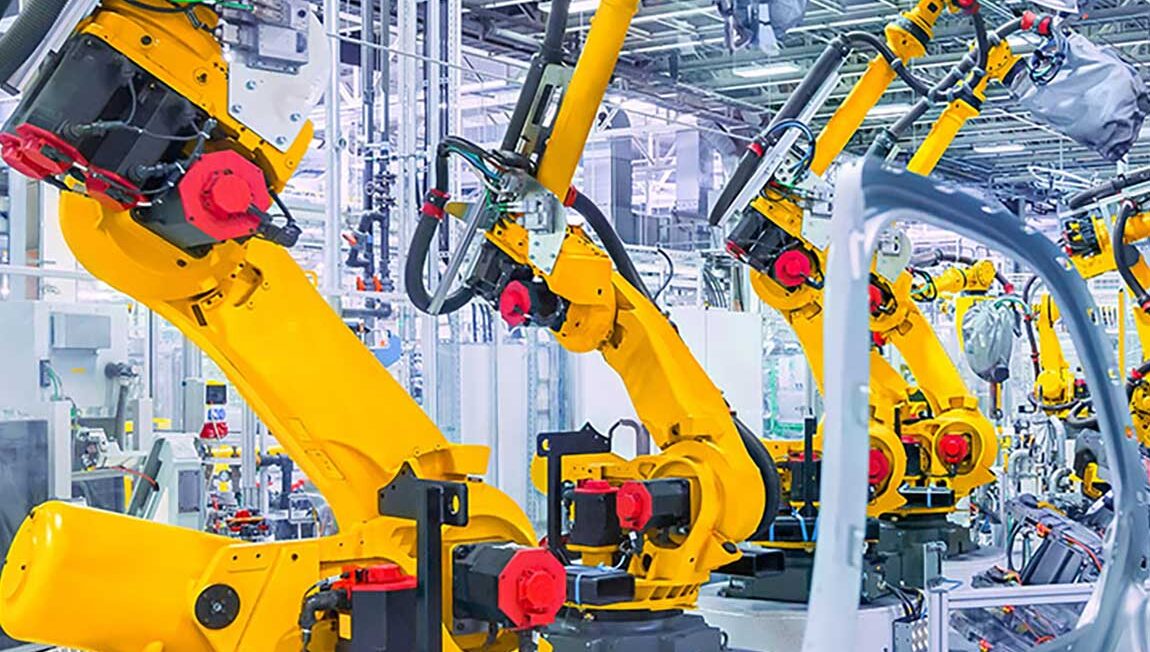
Here’s something warehouse managers often get wrong: they treat safety and efficiency as a trade-off. In reality, they’re the same goal. A warehouse that runs safely is a warehouse that runs well. Congested aisles don’t just put workers at risk — they slow down throughput, damage inventory, and hurt your bottom line. When you fix the safety problems, you fix the performance problems too.
It’s also the philosophy behind Precision Warehouse Design (PWD). With nearly 500 years of combined team experience and more than 6,000 successful projects completed, PWD helps facilities build safer, smarter operations — starting with how the space itself is designed.
The Critical Link Between Efficiency, Safety, and Security in Warehouse Operations
An inefficient warehouse layout is one of the biggest hidden risks in any facility. When products, workers, and heavy duty equipment are forced to share the same tight spaces, congestion builds up fast. That congestion leads to collisions, dropped loads, damaged inventory, and — in worst-case scenarios — serious injuries. It also creates security gaps, because when traffic flow is chaotic, it’s harder to monitor who’s doing what and where.
Modern safety and security in warehouse environments goes far beyond posting a few reminders on the wall. It requires intelligent infrastructure — the kind that makes the safe path also the easy path. That means thoughtful layout design, properly integrated systems, and a facility built around how people and equipment actually move.
PWD’s material handling consulting services evaluate product flow, manpower, and equipment interaction to design solutions that not only maximize efficiency but also promote safety in the warehouse from day one. When you understand exactly how your facility moves, you can build a layout that keeps it moving safely.
Leveraging Automation to Remove Human Risk
The most straightforward way to prevent handling injuries is to minimize manual handling. That doesn’t mean replacing workers — it means taking the most physically demanding and dangerous tasks out of human hands and letting automated systems handle them instead.
PWD’s conveyor & sortation systems are a great example. Instead of relying on workers to physically sort products by hand — a repetitive, error-prone process — conveyors move goods efficiently through the facility, with far less risk of ergonomic strain or sorting mistakes. Conveyors handle the sorting; your workers stay focused on tasks that actually require human judgment.
For moving large or heavy loads across the facility, robotics (AGV/AMR) solutions from PWD automate transport, keeping human workers out of high-traffic forklift zones. Automated Guided Vehicles (AGVs) and Autonomous Mobile Robots (AMRs) follow defined paths or navigate dynamically, reducing the chance of a person ever being in the wrong place at the wrong time.
Top 10 Warehouse Safety Tips for a Thriving Facility
The following list is designed as a practical audit checklist for warehouse managers. Whether you’re evaluating an existing facility or planning a new one, these tips reflect best practices in both safety and operational design.
Essential Warehouse Safety Tips to Implement Today
- Eliminate vertical climbing risks. Use Automated Storage & Retrieval Systems (AS/RS) and Vertical Lift Modules (VLM) to deliver goods directly to workers. This eliminates the need for ladders and high-reach forklifts — two of the most common sources of serious falls and tip-overs.
- Separate pedestrian and equipment traffic. Redesign your warehouse layout so forklifts and robots have dedicated travel lanes, and workers have their own clearly marked walking paths. Physical separation is the most reliable way to prevent vehicle-pedestrian collisions. For permanent lane definition, Troax guard rails and safety barriers provide a robust, TÜV-tested alternative to painted floor lines that can be obscured by traffic or wear. For active visual reinforcement, Troax Active Safety (formerly Claitec) offers overhead aisle marking lights and pedestrian alert systems that project clear warnings in real time.
- Deploy ergonomic picking solutions. Goods-to-Person technologies and Pick-to-Light systems reduce stretching, bending, and repetitive reaching, which can cause cumulative injuries over time. Workers stay comfortable and productive longer when the work comes to them.
- Invest in heavy-duty, secure racking. All warehouse racks should be professionally installed, correctly spaced, and regularly inspected for damage. A single compromised rack can cause a catastrophic collapse — so this isn’t an area to cut corners.
- Automate inbound freight. The loading dock is one of the most accident-prone areas in any warehouse. Receiving solutions that automate unloading reduce dock congestion and limit the number of people in that high-risk zone. Built-in quality checks catch errors early without adding bottlenecks.
- Implement intelligent controls. Advanced software & controls (SCADA/PLCs) monitor automated systems in real time. If a safety threshold is breached — say, a sensor detects a person in a restricted zone — the system can shut down the relevant equipment instantly, before an accident occurs.
- Optimize lighting and visibility. Dense storage areas are often poorly lit, which makes it much harder for both workers and equipment operators to see what’s ahead. High-visibility lighting throughout all aisles is a simple upgrade that prevents collisions and improves productivity.
- Rely on professional equipment installation. Even the best equipment becomes a hazard if it’s not set up correctly. PWD’s installation services ensure that conveyors, carousels, and other systems are properly anchored, aligned, and integrated — so they perform safely from day one.
- Maintain strict floor cleanliness. Debris, loose packaging, and spilled materials on warehouse floors are among the most common causes of slips and trips. Automated trash conveyors and streamlined end-of-line packaging systems can reduce clutter significantly without relying solely on manual cleanup.
- Conduct regular safety training and audits. As warehouses adopt more automation, workers need ongoing training, not just on traditional forklift safety, but also on how to interact safely with robots, conveyors, and other automated material-handling equipment. Regular audits help identify new risks as your operations evolve. PWD’s Lifecycle Services & Support program provides ongoing maintenance and system oversight to keep your automated equipment performing reliably, a natural complement to any internal safety audit cadence.
Expert Warehouse Design & Layout: Building Safety from the Ground Up
Addressing individual safety problems one at a time is better than doing nothing — but it’s not the same as building a safe warehouse. The most effective approach is to look at the whole picture: how your layout, equipment, traffic patterns, and storage systems interact with one another. When those elements are designed to work together, safety stops being something you manage after the fact and starts being something the facility enforces on its own.
PWD’s warehouse design & layout services apply that whole-facility perspective to every project. Our engineers create customized layouts that maximize space while meeting the specific safety and efficiency goals of your operation. Every facility gets a plan built around how it actually functions — not a generic blueprint retrofitted to fit.
In some cases, the most honest answer is that a current facility has simply outgrown its space. When the layout can no longer be optimized safely, the smarter move is a fresh start. PWD’s warehouse relocation services help facilities make that transition smoothly — moving to a better, safer space without losing operational momentum.
Partner with Precision Warehouse Design for a Safer, Faster Operation
Safety isn’t just the right thing to do — it’s a smart business investment. Fewer accidents mean lower workers’ compensation costs, less equipment damage, reduced downtime, and a workforce that trusts its environment. A well-designed, safe warehouse is also a faster, more profitable one.
PWD brings nearly 500 years of combined team experience and more than 6,000 completed projects to every engagement. With that much experience, we’ve encountered virtually every challenge a warehouse can face—and we know how to solve them.
Ready to build a safer, more efficient operation? Contact PWD’s material handling engineers today to get started. Contact Precision Warehouse Design to connect with our team and take the first step toward a warehouse that’s built to perform safely, every shift.