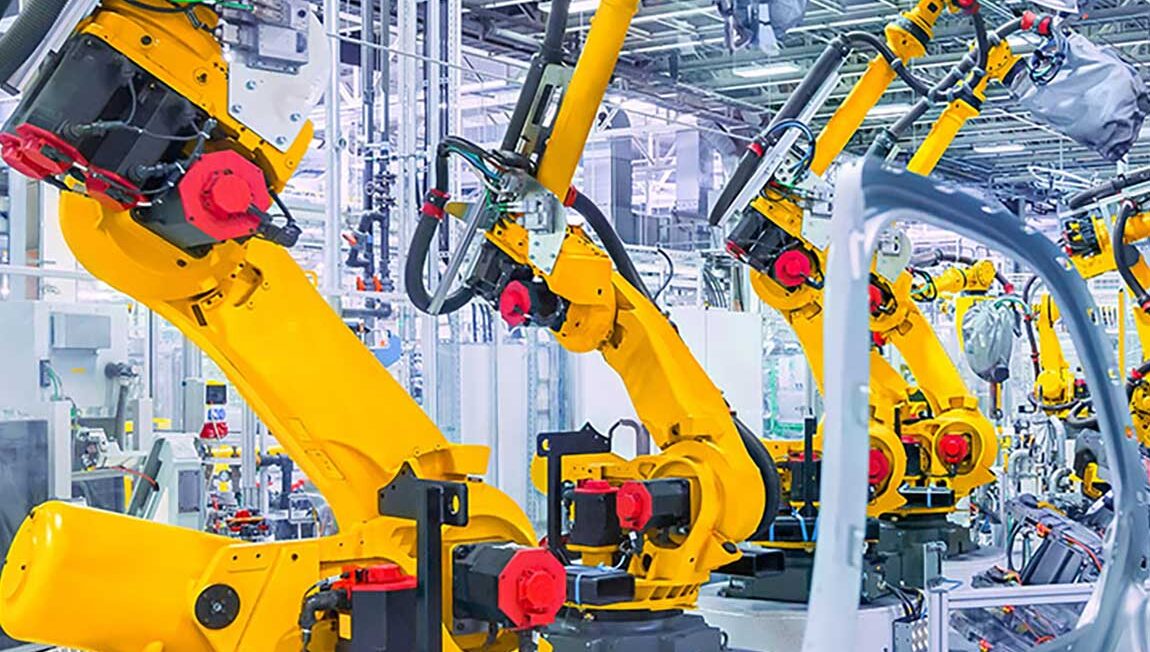
Modern technologies, including those used in robotic warehouse automation, have made warehouses more efficient than ever before. When implemented effectively, warehouse automation can reduce costs and help facilities fulfill orders with greater precision and speed, all while minimizing errors.
From science fiction to reality, the increasing popularity of robotic systems in a multitude of factory-based industries has helped to reshape the commercial landscape. As the technology of these systems continues to advance, the costs of integration become more affordable, and the capabilities continue to expand. What once was unavailable to many companies is now a reality that leaves production departments and corporate decision makers with the task of not deciding when to integrate these robotic warehouse systems into their operations, but how to design the integration to meet their needs.
What Is Warehouse Robotics?
Warehouse robotics use automated systems, machines, and software to move materials or perform essential tasks within a warehouse environment. These include picking and packing, sorting, transporting goods, and managing inventory. Robotic warehouse systems are revolutionizing operations by increasing efficiency, reducing errors, allowing for round-the-clock operations, and improving overall operational productivity.
Over the last few decades, robotic systems have become increasingly popular in manufacturing and storage warehouses to help companies work more efficiently and to refocus the human labor force away from jobs that could cause potential harm and monotony that could cause high turnover rates. The use of robotics allows materials to be handled automatically while reducing errors and creating more consistency. For many companies, the thought of integrating these systems causes financial worry at the cost of integrating the technology; however, costs have continued to fall while helping to increase profits in the long term.
Integrating robotics into your warehouse has also become easier over the years, with a greater workforce available to install, program, and maintain your new systems. The educational landscape is changing and integrating more opportunities for students to learn programming and engineering, creating an increase in robotic engineers to keep these systems operating in the way that you need.
Robotic Warehouse Automation Technologies Used by Precision Warehouse Design
There is a wide variety of technologies used in robotic warehouse automation, and we implement many of them when creating systems for our clients.
High-Speed Conveyors
Conveyor systems are the lifeblood of an automated warehouse. When designed well, high-speed conveyors can move items anywhere in your facility in less time — and with less risk — than it takes to haul items manually.
Scanners
Coupling conveyor systems with barcode scanners is a great way to automate a warehouse. Scanners provide seamless tracking and help systems direct conveyors to create truly self-sufficient transportation and sortation throughout the facility.
Vertical Lift Modules (VLMs)
Vertical lift modules, or VLMs, are essentially automated filing cabinets, only they’re used for small parts and supplies. VLMs can rapidly retrieve and deliver items to employees’ workstations, reducing walking time and improving productivity.
Picking and Storage Machines
Machines can also facilitate picking and storage. The OPEX Perfect Pick, for instance, uses robotic technology to pick items up to 80 pounds from aisles and deliver them to designated workstations, increasing inventory distribution rates.
Kardex AutoStore robots are designed for lighter items, making them ideal for micro-fulfillment processes. They also serve to make greater use of available space, giving warehouses more robotic storage space overall.
AGV and AMR Systems
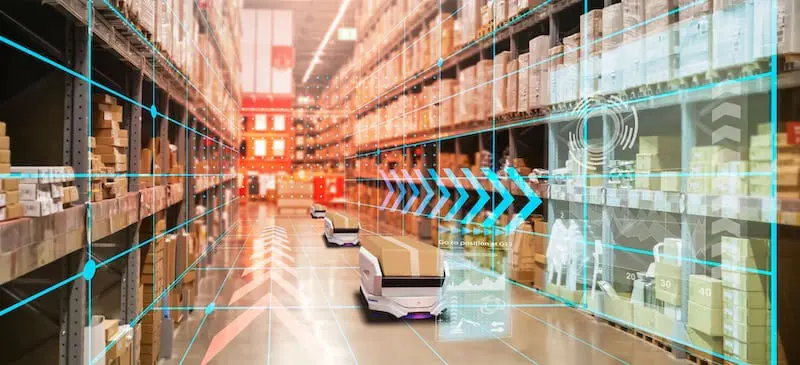
Autonomous Guided Vehicles (AGVs) and Autonomous Mobile Robots (AMRs) are among the most impactful warehouse robotics technologies available today. One of the robotic systems helping to revolutionize robotics in warehouse operations is the AGV MiR 1000. The Mobile Industrial Robot safely navigates your warehouse space with complete automation to improve transportation and logistics operations. Complete with laser guides and integrated safety features, it can easily maneuver itself around objects, stop when something crosses its path, and is damage resistant to falling objects. As part of a full line of MiR products, it can easily integrate with other elements of your system to improve your warehouse capabilities.
The Role of Warehouse Robotic Systems in Modern Operations
Robotics has changed the way warehouses can function regardless of the processes they will be tasked to complete. Because of the flexibility of robotic systems in performing both low and high volume tasks, not only can a robot handle large, repetitive tasks, but with minor programming changes, it can also easily handle low volume, niche processes as well. This creates a versatile system that allows both large and small operations to benefit from their usage.
When it comes to performing their intended tasks, robots allow facilities to complete more complex and highly variable tasks in a shorter amount of time than if completed by human labor. This allows not only for more opportunities to expand product lines but also creates a system in which quality can be more consistent.
Robotic systems have not completely replaced your human workforce, which allows facilities to continue to provide valuable employment for many individuals. These systems have been designed to work in conjunction with your employees. Through integrated safety features, employees and employers can work with minimized risks for workplace accidents and injuries. With robots taking on the task of monotonous and boring repetitive operations, your employees are free to utilize their skills and knowledge in ways that continue to advance the operations and impact of your company.
However, if there isn’t a solid human element involved, these systems can fall short. In addition, some tasks are simply too small in scale or too variable to be worth handling with automated warehouse solutions, in which case the human touch is absolutely vital. A cost-effective way to implement warehouse automation is to target areas of potential improvement — often in the form of automating large-scale operations or repetitive tasks, freeing up personnel for work best handled with a human touch.
How Robotic Warehouse Automation Improves Efficiency
More Precise Operations
When properly designed and programmed, warehouse robotics can make your facility operations more precise and less prone to error. Fewer picking and placement errors occur, sortation is more reliable, and less time is wasted correcting mistakes. This also improves customer experience, resulting in fewer returns and complaints.
More Efficient Employees
Warehouse automation is often best used to improve the efficiency of your employees, whether that’s by reducing walking time, improving safety, or making picking and order fulfillment easier. In essence, you’re helping your people do their jobs, not replacing their jobs altogether.
Quicker Fulfillment
Robotic warehouse automation makes order fulfillment quicker and easier, including when it comes to complex individual orders that require a human touch. By making both your automated processes and human-driven tasks more efficient, you’re able to increase throughput and serve more customers.
Round-the-Clock Operations
Only 20% of warehouses worldwide currently make use of automation technology. While some facilities don’t need high levels of automation, many others could benefit a great deal from advanced warehouse robotics. Automated warehouse robots don’t require breaks, shift changes, or overtime pay — they extend your facility’s productive hours without adding to your labor overhead.
What Does Warehouse Robotics Cost, and Is It Worth It?
While the initial investment in a robotic warehouse automation system can be high, these systems are generally cost-effective in the long run due to significant savings in labor costs, reduced errors, and increased operational efficiency. Businesses can implement warehouse robotic systems by partnering with a warehouse design and equipment provider like Precision Warehouse Design, who provide consultation, design services, equipment procurement, and implementation support.
The most relevant number for most operations managers is not the upfront cost but the payback period. In high-volume warehouse environments, robotic automation systems typically pay back through labor savings, throughput increases, and error reduction. Our team at Precision Warehouse Design factors this into our consulting and design process so you go into the project with a clear picture of the return before you commit.
Future Trends in Warehouse Robotics
If the past is any indication of the future, robotic systems will continue to improve the ways in which warehouse work functions. As robotics continue to develop, so do the opportunities available for warehouse operators to expand their own companies. Future trends indicate an increase in modular style robotic systems that allow for a variety of operations that can truly customize the needs of any warehouse.
Other advancements in warehouse robotics technology include:
Mobile Robots — these bots are designed to replace extensive and large conveyors, which can free up additional space in your warehouse for other needs.
Cobots — short for collaborative robots, these are intended to work in collaboration with human employees, easing the burdens of their job.
Drones — drones are becoming a more versatile robotic system that continues to reveal multiple different ways to utilize small but effective technologies. For warehouses, there are continued developments in safety, operation without GPS, and the ability to scale the number needed to accomplish the task.
Not all robotic operations will happen with a machine — technology improvements continue to develop in the software and controls systems that keep machines functioning. These computer technologies create cloud-based management that allows you to pinpoint production or supply difficulties quickly, enabling faster pivots. They also allow for better wireless tracking of your fleet and other connected logistical operations.
How Precision Warehouse Design Can Help
Making the decision to take your warehouse operations to the next level can be difficult, with worries about costs, training, and maintenance. However, when you work with Precision Warehouse Design, our team can help you integrate new technology that will improve your overall operations.
Precision Warehouse Design provides that human touch when designing automated warehouse solutions. Our staff has a combined 225+ years of experience in the industry, and our process allows us to take on complex projects more quickly than our competitors. Each robotic warehouse solution is tailored to the client’s needs, and we’ve helped numerous clients, including Mouser Electronics, Amazon, AT&T, FedEx, Chewy.com, and more.
Whether you are interested in learning more about the MiR 1000, exploring AutoStore robotic systems, or evaluating a full automated warehouse system for your facility, our team can help customize your warehouse design to increase function and safety while improving production and lowering costs.
Get in touch with Precision Warehouse Design to start designing your robotic warehouse automation solution.