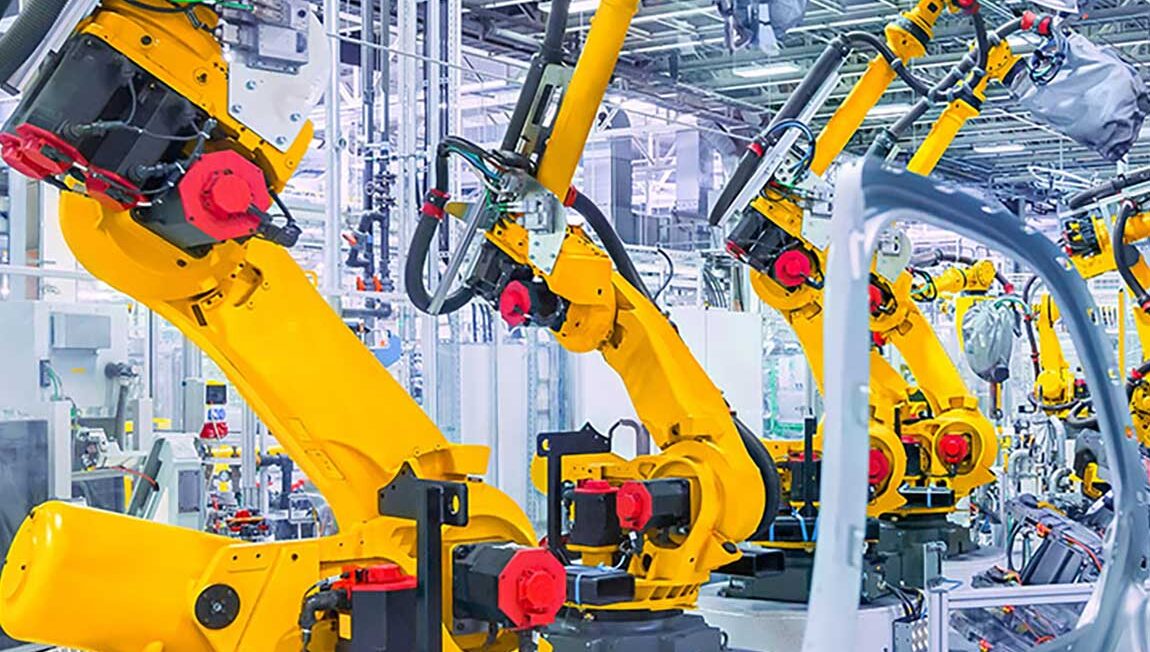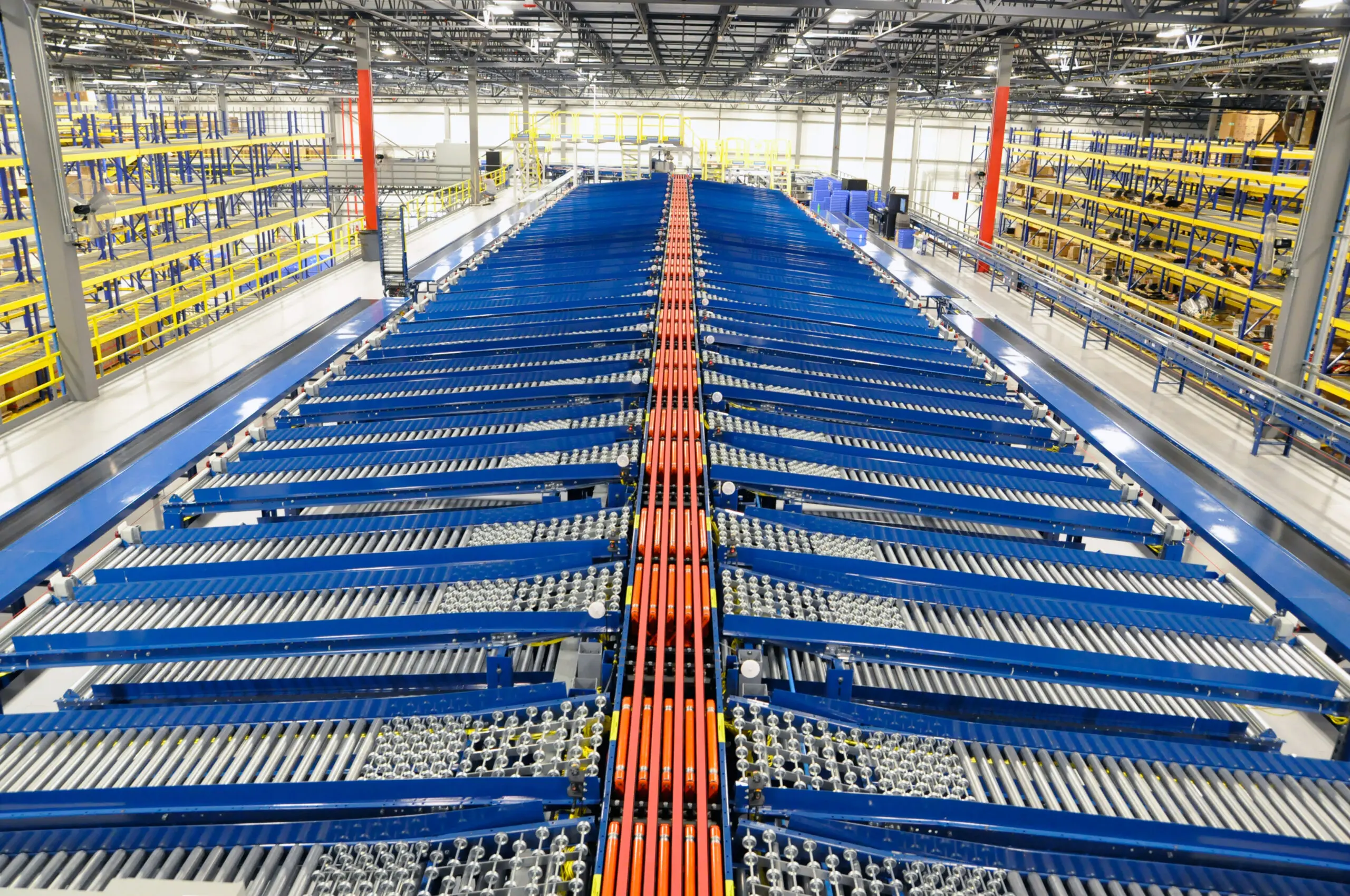
Automation is one way to improve the performance and success of your business. Since the early 20th century, conveyor belts have been used to move materials, increase productivity, and make businesses more efficient. More and more companies are also discovering the benefits of implementing conveyor systems in their warehousing facilities specifically and the advantages go well beyond simple product transport.
The needs of your business are unique, so it is important that you have the systems in place you need to be productive, efficient, and cost-effective. At Precision Warehouse Design, we offer ten different varieties of conveyor systems, including slider bed and roller bed styles, that can each be designed to meet your warehouse needs.
What Is a Conveyor System?
Conveyors are mechanical handling systems that use rollers, belts, or other systems to move items around a facility. They consist of a drive system that turns pulleys to move belts, rollers, chains, and so on. A conveyor belt system specifically consists of a continuous belt looped over a series of rotating rollers or pulleys, used to transport various materials and goods within a facility.
Types of Conveyor Systems Used in Warehousing
Businesses that create and distribute a high volume of products know how important it is that things run as smoothly as possible. Conveyor systems come in a variety of styles that utilize different handling systems. Some of the types of conveyor systems we offer at Precision Warehouse Design include:
Belt Conveyors
Available in slider bed and roller bed configurations. Slider bed systems allow workers to stand alongside the belt to inspect or pack products.
Roller Conveyors:
Utilize a series of rollers to move materials along the conveyor. Commonly used for heavy or bulky items and suitable for flat and inclined surfaces.
Chain Driven Conveyors:
Employ chains as the driving mechanism to move materials. Durable, capable of handling heavy loads, and often used in industries with high-volume or continuous material flow.
Overhead/Hanging Conveyors:
Utilize overhead tracks or rails to transport materials, maximizing floor space and offering flexibility in routing. A food processing business may need overhead conveyor systems that allow them to separate, package, and move various food products easily.
Spiral Conveyors:
Designed to move product between levels in a compact footprint.
Trough Belt Conveyors
Reduce costs by helping to ensure that no loose materials or cartons are lost while they are being transported through the warehouse.
Incline Roller Bed Conveyors:
Help move large, bulky, or unwieldy products from one floor to another with ease.
Bucket Conveyors:
Used for bulk material handling in manufacturing and industrial environments.
Various sortation systems and accumulation systems can also be added to increase functionality.
How to Choose the Right Type of Conveyor System for Your Warehouse
To yield the most benefits to your warehouse operations, you’ll need to select the right conveyor system. Some considerations here include:
- Safety requirements
- Volume of product you need moved every day
- Sortation requirements
- Automation needs
These factors will inform you on the size, features, and layouts that will maximize efficiency in your facility. Each industry has unique needs where conveyor belt systems are concerned. Manufacturing and logistics organizations would likely benefit from automated conveyor systems that are able to handle large, heavy items. Whatever your business needs are, belt conveyor systems have seemingly endless advantages.
The primary disadvantage of a conveyor system is that it tends to be fairly inflexible once it’s installed. Often, warehouse facilities need some major infrastructural changes in order to accommodate conveyors, so it’s important to consult with experts when considering a new system. You can read more about this in our detailed guide on how to choose the right conveyor system.
Advantages of Conveyor Systems in Warehouses
When your business relies on a warehouse for the creation, packaging, or distribution of your products, it is essential that it runs like a well-oiled machine. The various conveyor belt systems that Precision Warehouse Design offers can help make that possible with a number of key advantages.
Efficiency
These systems are able to automate nearly any aspect of the product creation process to make it more efficient. Slider bed systems allow workers to stand alongside the belt to inspect or pack products.
Increased Productivity
When your workers can take unnecessary steps out of their work process, such as lifting or moving boxes, they are able to work faster. Working with an automated system also helps them to become more familiar with the process over time, which can improve their work speed.
Cost Savings
You want to be sure that your business is sustainable long-term, so saving money is essential. Conveyor belt systems help you cut costs without sacrificing any of your products’ quality. These systems can reduce labor costs because your warehouse will not require as much manpower, and could reduce machine costs because you will not need to operate or repair additional machines.
Faster Product Movement and Sortation
Warehouse conveyors can move product much more quickly and reliably than manual transportation methods. That means more capacity for packaging and fulfillment processes and higher loads than might normally be possible with purely manual handling. Sortation can also be automated with specialized conveyor belts, helping to reduce the impact of human error on your fulfillment processes.
Versatility
Your business is unique, so the systems you use should be too. Precision Warehouse Design has ten types of conveyor belt systems to meet your needs. We will work with you to design a system, using the options we have available, that meets your needs, from sorting to distribution.
Space Utilization
Even in a warehouse, you do not have unlimited space, and there are likely many different steps that must be completed before your product is ready. It is important to use your space wisely. Our low-profile belt conveyors are available in multiple heights and widths to fit your space.
Improved Safety
Workers in your warehouse may have to carry or lift heavy boxes or materials. A conveyor belt system will improve the safety of your workplace by reducing the need for workers to interact directly with dangerous or heavy things. While many people might cite the risk for injury presented by the mechanical components of automatic conveyors, those risks pale in comparison to the other hazards present in most warehouses. Forklift-related injuries are far more common than conveyor system injuries, with incidents nearing 100,000 per year. Given that automating processes with a conveyor system can reduce your facility’s reliance on forklifts and heavy lifting, they can support a safer workplace overall. In addition, over 38,000 musculoskeletal injuries occurred in the warehousing and transportation sector in 2018 alone — conveyor systems reduce this risk by removing the need for constant lifting, turning, and carrying.
Easier on Your Personnel
By moving away from manual handling, the movement of product around your facility is far easier on your personnel. This could save your workers from the musculoskeletal injuries that result from constantly lifting, turning, and carrying heavy items — and as a result, easier on your insurance costs.
Flexibility
Your needs are always changing, and our conveyor belt systems are designed to meet your needs. We offer systems that can change direction, move between levels, and move at your ideal speed.
Reliability and Reduced Downtime
You should be able to trust that the tools you use in your warehouse will last. The best conveyor systems we offer at Precision Warehouse Design are dependable, so your business can keep running smoothly. Our conveyor systems can help reduce downtime by eliminating the need for forklifts, loading, and unloading. Our lifecycle services and support are designed to keep your systems running at peak performance over the long term.
Streamlined Operating Costs
Conveyor systems can help you streamline operating costs by cutting overhead, reducing the incidence of workplace accidents, and making more efficient use of labor hours. A reduced incidence of human error and accidental losses can minimize costs from lost or misallocated product while preventing returns from customers as well. The end result is a more efficient and more profitable warehouse facility.
Scalability
If you are responsible for the warehouse operations of a local logistics business, then you may not need extensive conveyor belt systems. At Precision Warehouse Design, we can help you find the system you need, no matter the size of your operation.
What Does a Warehouse Conveyor System Cost?
Conveyor system costs vary widely based on the type of system, the length and complexity of the layout, the level of automation and sortation required, and any infrastructure changes your facility needs to accommodate the system.
A basic gravity roller conveyor for a smaller operation may start in the low tens of thousands. A full-scale powered conveyor and sortation system for a high-volume distribution center can run significantly higher. The more useful number for most operations managers is the payback period: in high-volume environments, conveyor systems typically pay back through labor savings, throughput increases, and error reduction within 18 to 36 months.
Using our FasTrak consulting and design services, our professionals at PWD include full financial modeling in the design process — so you go into the project with a clear picture of the return before you commit.
Industries That Use Conveyor Systems
Any industry that makes use of warehouse space can benefit from conveyors. That includes:
- Retail and ecommerce fulfillment — high order volumes and tight shipping windows make conveyors essential for ecommerce fulfillment operations
- Manufacturing and logistics — benefit from automated conveyor systems that handle large, heavy items at sustained throughput rates
- Food processing — overhead conveyor systems allow separation, packaging, and movement of food products through sanitary environments
- Third-party logistics (3PL) — multi-client operations depend on sortation accuracy and throughput speed
Trust Precision Warehouse Design for Your Warehouse Conveyor Systems
Ensuring your warehouse runs properly is essential for the long-term, sustainable success of your business. Belt conveyors are reliable, so you can trust that your manufacturing business is efficient and regularly meets deadlines for clients.
Conveyor belt systems are not one size fits all because no two warehouses are the same. Using our FasTrak design services, our professionals at PWD can help you design the perfect conveyor system that can overcome the hurdles most facilities experience. Our services include layout design, equipment specification, and budgeting, making it both comprehensive and efficient.
Warehouse Conveyor FAQs
What is a conveyor belt system?
A conveyor belt system is a mechanical handling solution that consists of a continuous belt looped over a series of rotating rollers or pulleys. It is used to transport various materials and goods within a facility.
What are automated conveyor systems?
Automated conveyor systems are conveyor belt systems equipped with advanced technology, such as sensors, robotics, and software control, to automate material handling processes. They are commonly integrated with scanning technology and WMS platforms.