
Vertical Lift Modules (VLMs) and vertical carousels are automated storage systems that deliver items directly to an operator at an ergonomic height. Instead of operators walking through aisles to find stored products, the retrieval system brings the requested item to the operator while also utilizing the full vertical storage potential within a facility. This approach acts much like a robust industrial vending machine for your warehouse inventory items.
These vertical systems consist of two columns of trays with an extractor/inserter in the center. When an item is requested, the extractor retrieves the tray containing the stored items and presents it to the operator at a workstation opening. VLMs are ideal for items of different heights and can handle heavy loads with ease.
These operate similarly to a Ferris wheel, with carriers or shelves attached to a chain drive that rotate vertically to bring requested items to access openings. The vertical carousel uses a series of shelves, boxes, or bins to store inventory compactly.
They convert underutilized vertical storage space into accessible high density storage, often reducing the floor space needed for inventory by 80% or more. This results in a significantly smaller footprint for your storage operations.
By bringing goods directly to the picker, vertical carousels and VLMs eliminate walk and search time. This fast access and fast retrieval capability dramatically increases pick rates and overall productivity.
Light-directed technology, controlled access, and automated storage delivery minimize human error and provide increased security for valuable or sensitive items. The system tracks locations precisely, ensuring the right part is picked every time.
Presenting items at an ergonomic height reduces bending, stretching, and climbing, improving worker safety and comfort. The vertical carousel or VLM brings the trays or carriers to the "golden zone" for the operator.
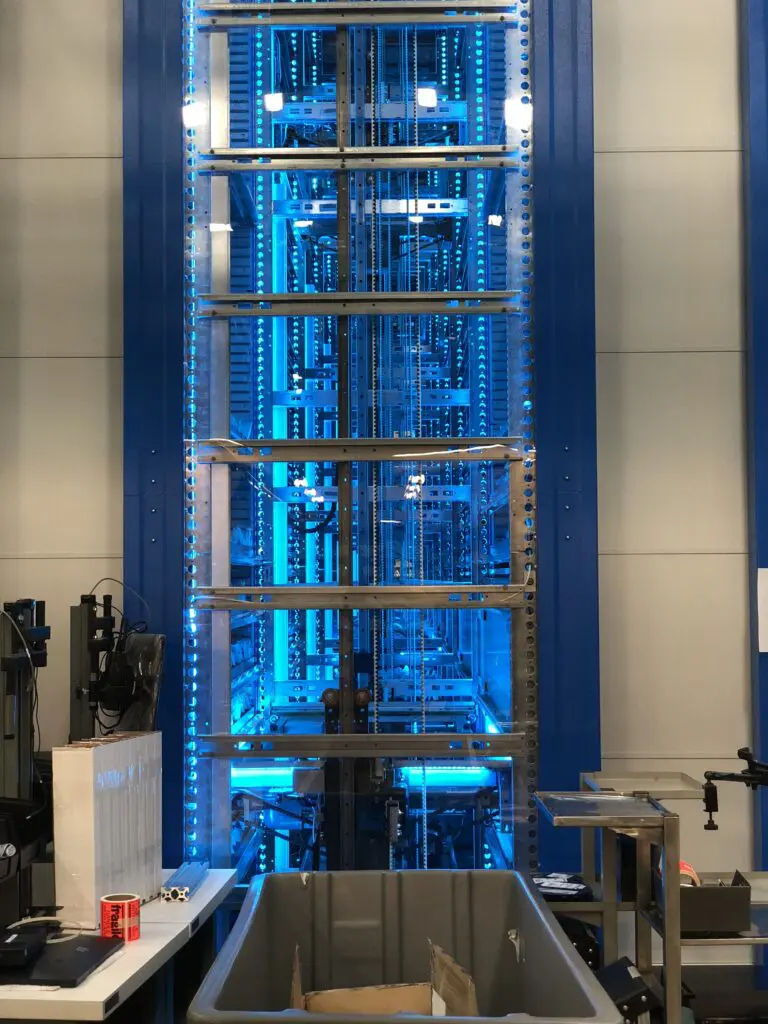

Our expertly integrated vertical storage carousel and VLM storage solutions deliver measurable benefits that directly impact your operational efficiency and bottom line:
Recover up to 85% of floor space compared to traditional shelving, allowing for higher storage density or reallocation of space for other critical business operations. The unit height utilizes the building's verticality to maximize storage capacity.
Operators can achieve significantly higher pick rates by eliminating travel time. The machine presents individual trays or boxes directly, leading to faster order fulfillment and improved picking speed.
Automated tracking and optional light-directed technology within the system minimizes mispicks and lost inventory. This provides real-time accuracy and reduces the need for manual cycle counts of partitions and locations.
Controlled access points and secure internal storage provide an ideal solution for high-value components, tools, or regulated items.
Precision Warehouse Design approaches VLM and vertical carousel storage with a comprehensive understanding of your inventory characteristics, throughput requirements, and operational goals. We recognize that selecting the right solution—whether a vertical parts carousel or VLM—depends on a meticulous analysis of your SKU profiles, transaction volume, and existing facility layout.
Common challenges we solve with these systems include:
Maximizing storage within existing building footprints without costly expansion.
Dramatically increasing pick rates for small parts and components using fast retrieval.
Improving security for high-value or sensitive inventory storage.
Enhancing ergonomics and reducing repetitive movements for operators using automated storage.
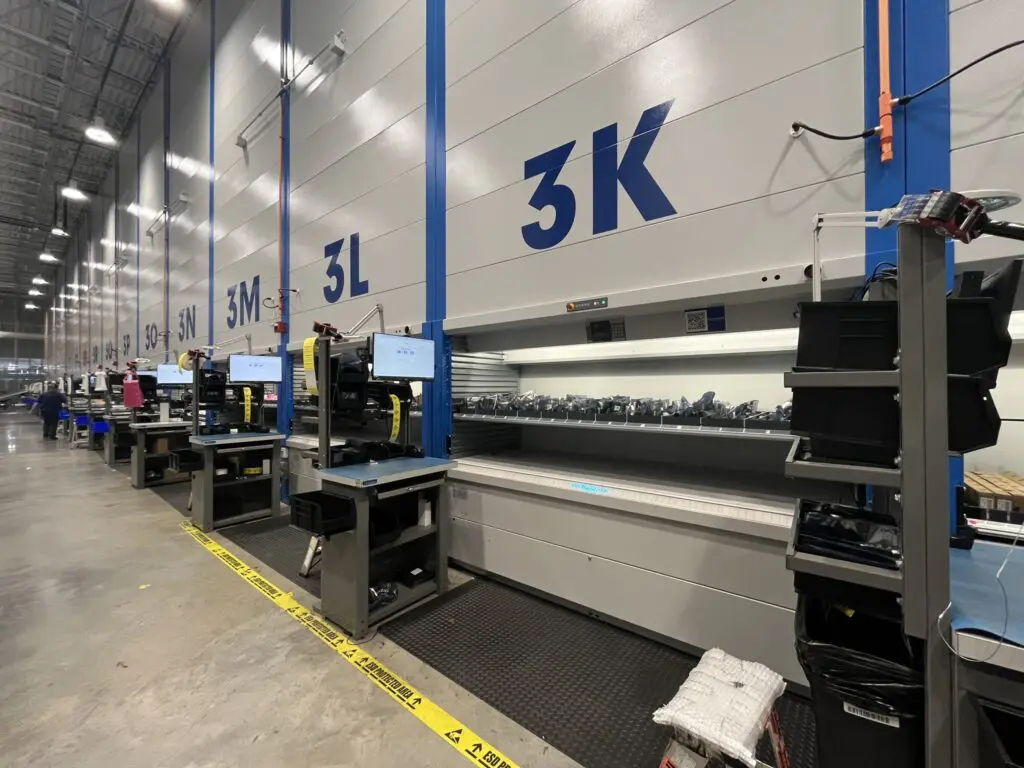
By transitioning from static shelving to dynamic storage, facilities can resolve specific operational bottlenecks. The following use cases highlight the diverse applications of these systems.
In fast-paced e-commerce environments, minimizing the time it takes to locate and pick small items is critical. A carousel storage system utilizes batch picking software to retrieve multiple orders simultaneously. Instead of workers walking miles per shift, the goods-to-person delivery method presents items directly at an ergonomic workstation. This drastically reduces order cycle times and nearly eliminates mispicks.
Manufacturing facilities often struggle with storing thousands of small components needed for daily assembly. A vertical storage system acts as a centralized, highly dense buffer right next to the production line. By delivering the exact parts needed just-in-time, these systems prevent line starvation and keep valuable floor space clear of clutter and static bins.
Facilities that rely on expensive tooling, dies, and maintenance parts require both organization and security. A warehouse automated storage retrieval system restricts access via a secure, lockable door and requires badge or PIN entry. This ensures that only authorized personnel can access high-value inventory, providing a complete audit trail of who took what, and when.
Industries like pharmaceuticals and electronics manufacturing require strict environmental controls. Enclosed vertical carousels can be integrated with climate-control systems to maintain specific temperatures or humidity levels. This localized environmental control is far more cost-effective than cooling or purifying an entire warehouse.
Determining if your facility is an ideal candidate for a vertical carousel storage system requires looking at both your physical building constraints and your daily workflow.
To put it in perspective, think of a vertical carousel as a massive, automated vending machine for your warehouse. Instead of spreading your inventory out across a huge floor space and making workers walk to find things, this machine stacks items up to the ceiling and brings the exact item you need right to your hands.
A vertical carousel operates on a motorized track that rotates carriers in a continuous vertical loop. It is engineered to capitalize on the unused clear height of a building, often reaching up to 40 feet or more. By eliminating the aisles required for human or forklift travel, these systems condense the footprint of your inventory storage by up to 85%. They are highly recommended for facilities that have exhausted their horizontal floor plan, face rising real estate costs, or process a high volume of single-line or multi-line orders daily.
|
Industry
|
Primary Challenge Solved
|
Typical Inventory Stored
|
Space Savings Potential
|
|---|---|---|---|
|
Automotive
|
Slow retrieval of maintenance parts
|
Fuses, spark plugs, small hardware
|
70% - 80%
|
|
Electronics
|
Dust exposure and static control
|
Microchips, circuit boards, sensors
|
75% - 85%
|
|
E-Commerce
|
High labor costs and slow pick rates
|
Cosmetics, apparel accessories, media
|
80% - 90%
|
|
Healthcare
|
Shrinkage and regulatory compliance
|
Surgical tools, pharmaceuticals, implants
|
60% - 75%
|
Precision Warehouse Design partners with industry-leading manufacturers to deliver best-in-class vertical carousels and VLM storage solutions. Our tailored approach ensures we recommend the optimal system tailored to your specific needs and budget, rather than a limited product catalog.
Our trusted partners for VLM & Carousel Storage include:
We ensure that every VLM or vertical carousel system we implement is seamlessly integrated with your existing Warehouse Management System (WMS), Enterprise Resource Planning (ERP), or Warehouse Control System (WCS). This connectivity provides real-time inventory updates, optimized task assignment, and comprehensive data for reporting and analytics.
Every VLM and vertical carousel system we design is built for seamless integration into your existing or planned warehouse infrastructure. This ensures smooth data flow and synchronized operation with other automated storage or manual processes. We prioritize adherence to relevant industry safety standards (OSHA, ANSI) and best practices, designing solutions for optimal ergonomics and secure operation. Our experienced teams have a proven track record of successful installation and implementations across the U.S. and Canada, serving diverse industries including manufacturing, automotive, electronics, and ecommerce.
The ROI for a standard carousel storage system typically ranges from 12 to 24 months. This rapid return is generated through three main avenues: recovered floor space, dramatically reduced labor costs, and decreased inventory shrinkage. For example, by reallocating two workers from walking aisles to focused picking, a facility might save upwards of 80,000 USD to 100,000 USD annually in labor alone, quickly offsetting the initial capital expenditure.
Traditional picking requires constant bending to reach bottom shelves, stretching for top shelves, and carrying heavy loads. An automated storage and retrieval system completely eliminates these hazards. By utilizing a motorized carousel, all goods are delivered to an ergonomically optimized access opening (the golden zone), which is typically positioned at waist height. This heavily reduces worker fatigue, minimizes workers’ compensation claims, and increases employee retention.
Vertical carousels and Vertical Lift Modules (VLMs) are primarily designed for small-to-medium parts, sub-assemblies, and tools, rather than full pallet storage. While they significantly reduce the need for standard shelving and bin storage, facilities typically maintain traditional racking for bulk reserve storage. A standard forklift is still used to unload bulk goods, which are then decanted and loaded into the vertical storage system for daily piece-picking operations.
Yes. Modern automated vertical storage solutions feature advanced API and middleware capabilities that allow seamless integration with virtually any WMS or ERP software. This integration enables real-time inventory tracking, dynamic slotting based on demand, and batch picking optimization. The software directs the machine to sequence picks perfectly, ensuring the operator is never waiting for the next item.
The most critical requirement is adequate vertical clear space. To maximize the value of the investment, facilities should have a ceiling clearance of at least 15 to 20 feet, though higher ceilings yield better storage density. Additionally, the concrete slab must be capable of supporting the high point-loads of the machinery, and adequate power requirements (typically 3-phase power) must be accessible near the installation site.
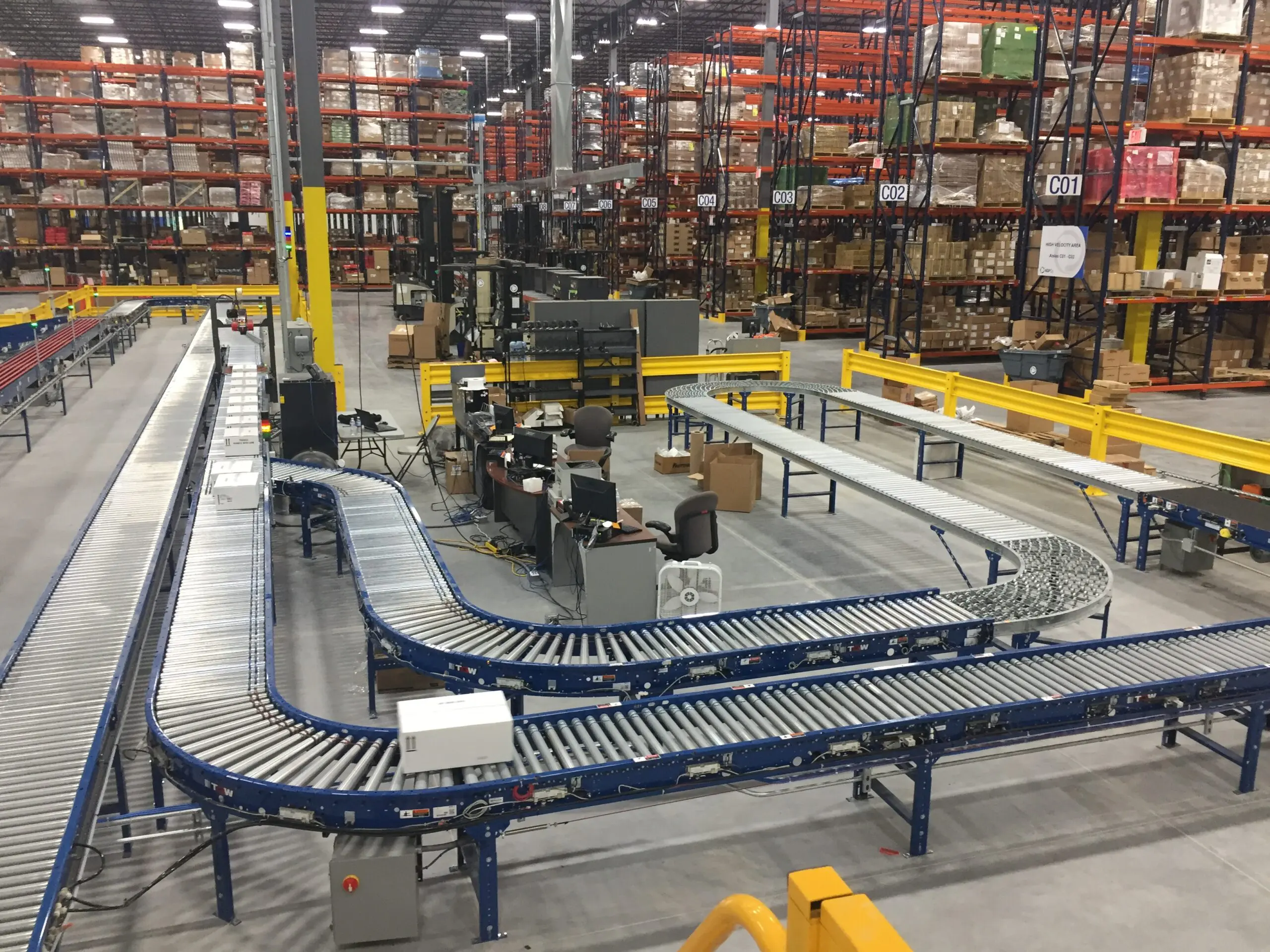
Unlock significant space savings, boost picking efficiency, and enhance inventory accuracy with a custom-engineered VLM or vertical carousel storage system from Precision Warehouse Design. Our expert engineers are ready to assess your facility and design a tailored retrieval system that transforms your small parts and inventory management. Whether you need to store pallets or small boxes, we have the equipment and service to help.