For many operations leaders, warehouse automation looks like an obvious win on the floor: faster picking, fewer errors, and less strain on staff. But before a system gets built, finance wants to see the ROI of warehouse automation. Calculating it clearly, with real inputs and a realistic timeline, is what turns a strong pitch into an approved capital project. This guide walks through what drives automation costs, how to build a solid ROI and payback period calculation, and where automation tends to pay off fastest.
Why Warehouse Automation ROI Matters Now
Labor has gotten harder to find and more expensive to keep. At the same time, order volumes keep climbing, especially for companies fulfilling online orders where customers expect fast, accurate shipping. Margins are tighter than they used to be, and finance teams are scrutinizing large capital requests more closely than in years past. That combination has pushed warehouse automation investment from a “nice to have” higher up the priority list for many operations. But a bigger budget ask comes with a bigger burden of proof. Decision makers want to see the math before they sign off, not just a demo of what the equipment can do.
Understanding Warehouse Automation Costs
Before you can calculate a return, you need an accurate picture of what you’re spending. Warehouse automation costs typically fall into a few categories:
- Equipment and hardware. Conveyors, sorters, robotics, storage systems, and the physical components that move product through your facility.
- Software and controls. Warehouse execution systems, programmable logic controllers (PLCs), and the control architecture that tells the equipment what to do and when.
- Installation and integration. Labor and engineering time to install equipment and connect it to your existing systems.
- Facility modifications. Structural changes, electrical upgrades, or floor work needed to support new equipment.
- Training. Time and resources spent getting your team comfortable operating and troubleshooting the new system.
- Ongoing maintenance. Parts, service contracts, and the internal or outsourced labor needed to keep the system running.
If you overlook any of these categories during budgeting, you’ll likely go over budget later because of unplanned costs, which throws off your ROI calculation before the project even gets going.
How to Calculate ROI of Warehouse Automation
Once you know your costs, you’re ready to calculate the return. Here’s how to calculate ROI of warehouse automation using two connected formulas.
The ROI Formula
ROI = (Total Savings and Gains − Total Investment) ÷ Total Investment × 100
For example, if a facility invests $500,000 in a new system that saves $150,000 a year, the total savings over a five-year evaluation period is $750,000. The ROI is (750,000 − 500,000) ÷ 500,000 × 100, or 50%.
This gives you a percentage showing how much value the project returns relative to what you spent.
The Payback Period Formula
Payback Period = Total Investment ÷ Annual Savings
Using that same $500,000 investment, if the system saves $150,000 a year, the payback period is 500,000 ÷ 150,000, or about 3.3 years.
This tells you how many years, or months, it takes for the system’s savings to cover the initial investment.
Key Inputs to Track
Your numbers are only as good as the inputs behind them. Focus on figures you can actually measure:
- Labor savings. Reduced headcount needs, less overtime, or lower reliance on temporary staff during peak periods.
- Throughput gains. More units processed per hour with the same or smaller footprint.
- Error and rework reduction. Fewer mis-picks, mis-ships, and returns caused by manual handling.
- Space utilization. Better use of vertical space or a smaller footprint that frees up square footage for other uses.
- Injury-related costs. Lower workers’ comp claims and fewer lost workdays tied to manual material handling.
Every facility’s numbers will look different, but running the math this way keeps the estimate grounded, not optimistic.
Is your facility ready for peak season?
Talk to a warehouse readiness specialist about your layout, KPIs, and go-live timeline.
What Shifts the Payback Timeline
A few variables commonly push payback earlier or later than expected: facility size and current throughput, system design complexity, local labor market conditions, and how well the new equipment integrates with what you already have running. A phased rollout, for example, can extend the full payback period but reduce the upfront capital risk.
Benefits of Warehouse Automation Beyond the Numbers
Not every benefit of warehouse automation shows up as a line on a spreadsheet, but that doesn’t mean you should ignore it when weighing the investment.
- Workforce retention. Automating repetitive, physically demanding tasks makes warehouse jobs easier to fill and easier to keep filled.
- Scalability for peak seasons. Automated systems flex to handle volume spikes without a scramble to hire and train temporary labor.
- Better customer experience. Fewer errors and faster processing translate into more accurate, on-time shipments.
- A safer work environment. Less manual lifting and material handling means fewer workplace injuries.
These outcomes support the ROI case even when they’re harder to put a dollar figure on.
Maximizing Your Warehouse Automation Investment
Getting a strong return isn’t only about the technology. How you plan and roll out the project matters just as much. A few practices tend to separate automation investment that pays off quickly from projects that underdeliver:
- Right-size the system. Design for your actual volume and growth projections, not for the biggest system a vendor can sell you.
- Consider a phased approach. Rolling out automation in stages spreads out capital spending and lets you validate assumptions before committing further.
- Choose a partner with cross-system expertise. An integrator who understands how conveyor, sortation, storage, and controls work together will design a system that performs well as a whole, not just as individual pieces.
That last point matters more than it might seem. A system designed piece by piece, without anyone accountable for how it all fits together, is one of the more common reasons ROI projections fall short of reality.
How PWD Approaches Automation ROI
At Precision Warehouse Design, ROI modeling starts with an honest look at your operation, not a standard off-the-shelf proposal. Our team assesses your current process before recommending equipment, so the system we design matches your actual throughput and facility constraints rather than a generic benchmark.
We work across conveyor and sortation systems, automated storage and retrieval, and the controls and software that tie them together, which means payback modeling accounts for how these systems perform as one operation rather than as isolated upgrades. That approach is central to our systems integration services: design decisions get made with the full picture in mind, not just the piece being installed that quarter.
Real ROI: PWD Automation Case Studies
Numbers on a page are one thing. Here’s how that approach has played out in practice.
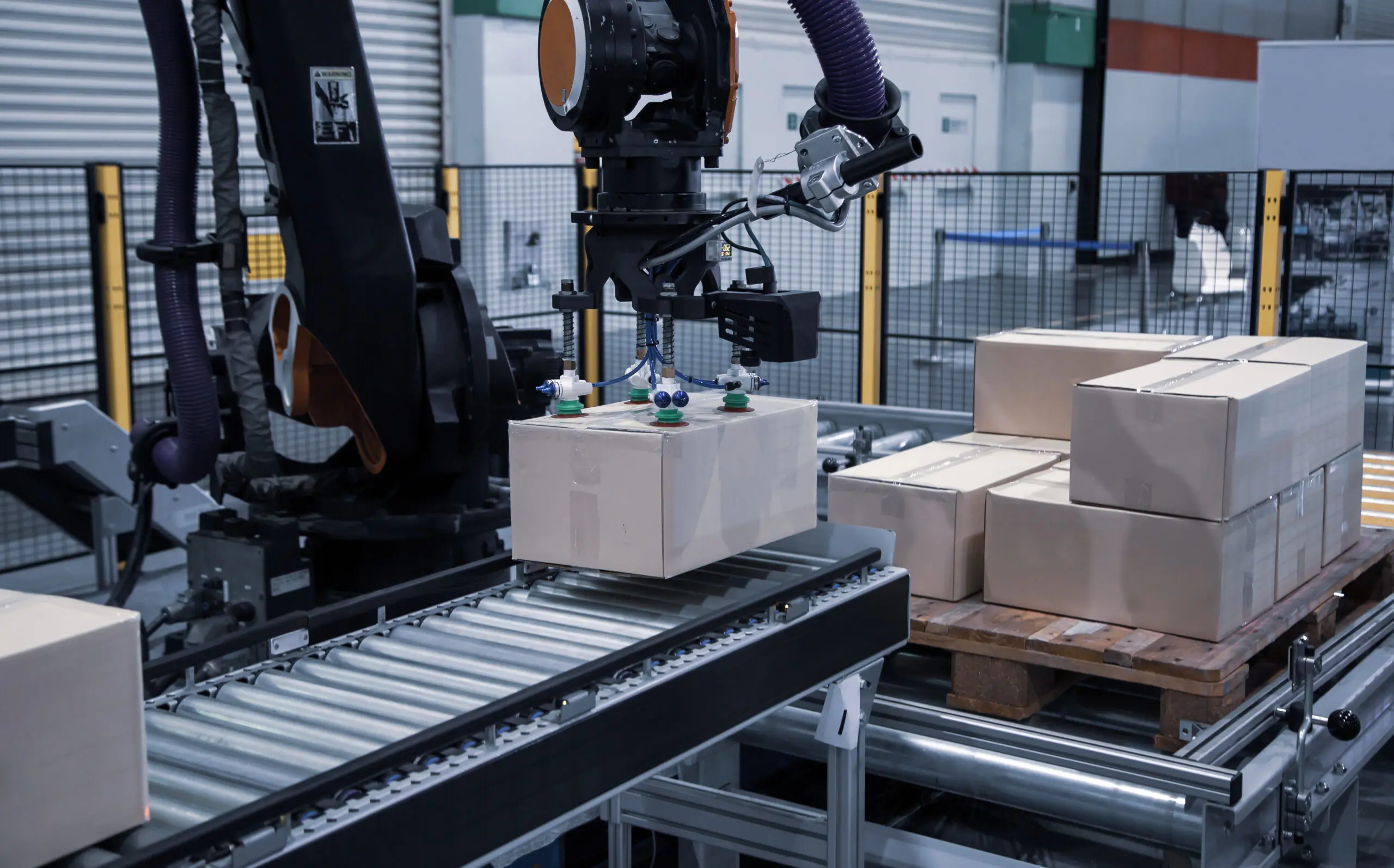
A specialty toy manufacturer needed to upgrade two fulfillment centers ahead of the holiday season, on a four-month timeline. PWD installed conveyor sortation systems feeding 20 dock doors along with scan tunnels and pallet racking across more than 600,000 square feet of facility space. The new system handled roughly 60 cartons per minute, giving the company scalable infrastructure to meet seasonal demand spikes without adding proportional headcount.
An industrial machinery distributor facing labor shortages and a manual, error-prone fulfillment process turned to PWD for a different kind of upgrade: an automated picking system paired with a multi-level pick module and two sortation conveyor systems, all tied together through custom software integration. The result was higher throughput with less reliance on manual labor and noticeably better order accuracy, the kind of operational shift that shows up directly in an ROI calculation.
You can review more completed projects on the case studies page.
Frequently Asked Questions
What is a good ROI for warehouse automation?
Most automation projects target a payback period of two to four years, though this varies by system type and facility.
A good benchmark for warehouse automation ROI is a return that outpaces what the capital would earn if invested elsewhere in the business, factoring in labor savings, throughput gains, and error reduction.
How long does it take to see payback on warehouse automation?
Payback periods typically range from one to five years depending on system complexity and how well the project is scoped.
Simpler upgrades, like a single conveyor line, tend to pay back faster than a full automation overhaul involving multiple integrated systems.
What factors affect the cost of warehouse automation?
Equipment type, facility size, integration complexity with existing systems, and any structural or electrical work needed to support the new equipment shape warehouse automation costs.
Ongoing maintenance and training costs also factor into the total investment, even though they’re easy to underestimate early on.
Is warehouse automation worth it for small or mid-size warehouses?
Warehouse automation investment isn’t only for large distribution centers. Smaller facilities can see strong returns from targeted upgrades, like a single conveyor or sortation line, rather than a full-scale system.
The key is right-sizing the investment to actual volume rather than assuming automation only makes sense at scale.
Warehouse Automation ROI: Final Takeaways
Warehouse automation ROI isn’t a guessing game. When you account for real costs, track the right savings, and build a realistic payback model, you get a number finance teams can actually approve. If you’re ready to see what automation could mean for your facility, get in touch with our team to talk through your numbers.